Home
Complete Home Construction Process Explained Step by Step

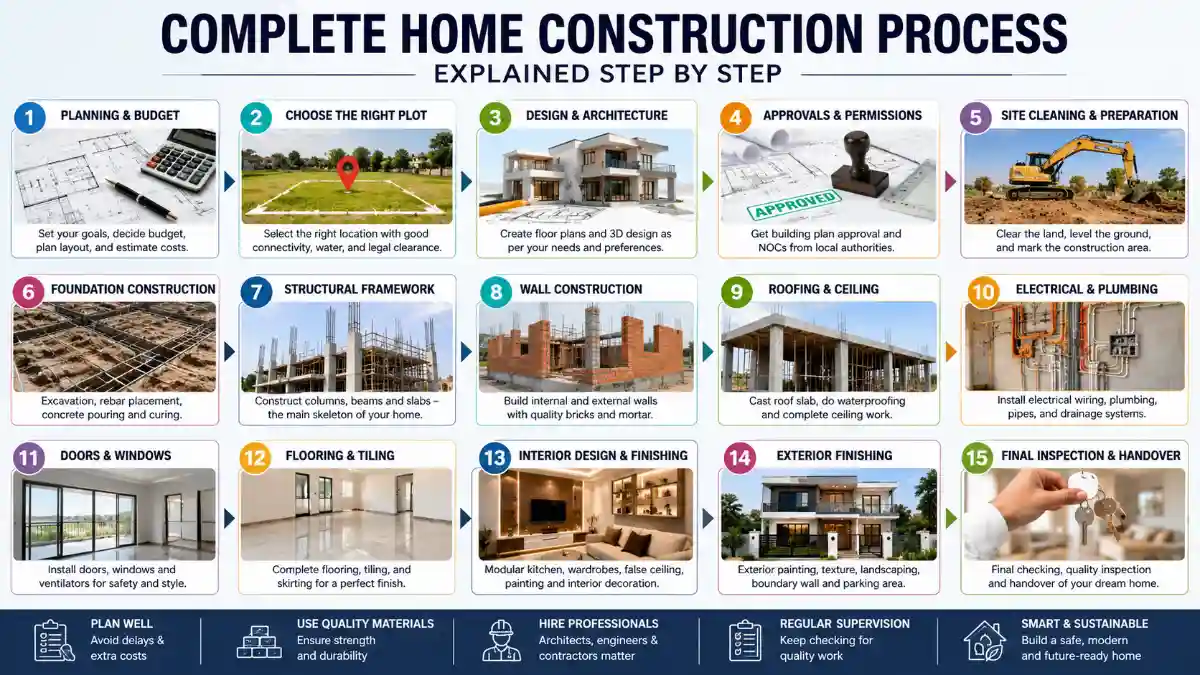
Building a dream home is one of the biggest achievements in life. A house is not just a structure made of bricks and cement; it is a place where families create memories, enjoy comfort, and spend important moments together. However, constructing a home requires careful planning, proper budgeting, skilled labor, and smart decision-making at every stage.
Many people start home construction without fully understanding the process, which often leads to delays, budget problems, and design mistakes. That is why knowing the complete construction process step by step is extremely important before starting any project.
This article explains the complete home construction process in detail, from planning and foundation work to interiors and final finishing.
Step 1: Planning and Budget Preparation
The first and most important step in home construction is planning. Before beginning any construction work, homeowners should clearly define:
- House size
- Number of rooms
- Design style
- Budget
- Location
- Construction timeline
A proper budget should include:
| Expense Type | Estimated Purpose |
|---|---|
| Land Cost | Plot purchase |
| Construction Material | Cement, bricks, steel |
| Labor Charges | Workers and contractors |
| Interior Design | Furniture and decoration |
| Electrical & Plumbing | Wiring and water systems |
Good planning helps avoid unexpected expenses later.
Step 2: Choosing the Right Plot
Selecting the right land is extremely important for successful home construction.
Important Factors While Choosing Land
- Good road connectivity
- Water availability
- Safe neighborhood
- Proper drainage system
- Electricity access
- Future property value growth
Before buying land, legal verification and property documents should always be checked carefully.
Step 3: House Design and Architecture
After selecting the plot, the next step is creating a proper house design.
Role of an Architect
An architect helps in:
- Floor planning
- Exterior design
- Interior layout
- Ventilation planning
- Space management
Modern home designs now focus on:
- Natural lighting
- Open spaces
- Smart room layouts
- Energy efficiency
A well-designed home improves comfort and long-term value.
Step 4: Approval and Legal Permissions
Before construction starts, homeowners must obtain legal approvals from local authorities.
Common Approvals Required
- Building plan approval
- Municipal permission
- Electricity connection approval
- Water connection approval
Ignoring legal permissions may create future legal problems.
Step 5: Site Cleaning and Preparation
Once approvals are completed, the construction site is cleaned and prepared.
Site Preparation Includes
- Removing unwanted plants and debris
- Leveling the land
- Marking the construction area
- Soil testing
Proper site preparation ensures a strong and stable foundation.
Step 6: Foundation Construction
The foundation is one of the most critical parts of any building because it supports the entire structure.
Foundation Process
- Excavation work
- Steel reinforcement placement
- Concrete pouring
- Waterproofing
A strong foundation increases the durability and safety of the house.
Step 7: Structural Framework Construction
After the foundation is completed, the main structural framework of the house is built.
Structural Work Includes
- Columns
- Beams
- Slabs
- Walls
Construction materials such as cement, steel, bricks, and concrete are heavily used during this stage.
Proper engineering is essential to ensure building strength and earthquake resistance.
Step 8: Wall Construction and Brickwork
Brickwork begins after the structural framework is completed.
Wall Construction Includes
- External walls
- Internal room partitions
- Staircase walls
Proper alignment and quality bricks improve building stability and insulation.
Step 9: Roofing and Ceiling Work
Roof construction is another major step in the home-building process.
Roofing Work Includes
- Roof slab casting
- Waterproofing
- Ceiling finishing
Modern homes often include false ceilings for decorative lighting and better aesthetics.
Step 10: Electrical and Plumbing Installation
Once the main structure is ready, electrical and plumbing systems are installed.
Electrical Work Includes
- Wiring
- Switch boards
- Lighting systems
- Power backup setup
Plumbing Work Includes
- Water pipelines
- Bathroom fittings
- Drainage systems
- Kitchen water connections
Good-quality materials help avoid future maintenance issues.
Step 11: Doors and Windows Installation
Doors and windows are installed after basic structural and utility work is completed.
Common Materials Used
| Item | Materials |
|---|---|
| Doors | Wood, steel, PVC |
| Windows | Aluminum, glass, UPVC |
Modern large windows improve natural light and ventilation.
Step 12: Flooring and Tile Work
Flooring greatly affects the appearance and comfort of a home.
Popular Flooring Options
- Marble
- Granite
- Ceramic tiles
- Wooden flooring
- Vinyl flooring
The choice depends on budget, durability, and design preference.
Step 13: Interior Design and Decoration
Interior design transforms a basic structure into a comfortable and beautiful living space.
Interior Design Includes
- Furniture selection
- Modular kitchen
- Wardrobes
- Lighting decoration
- Wall painting
- Curtains and décor items
Modern homes often use minimalistic and smart interior styles.
Step 14: Exterior Finishing
Exterior finishing improves the outer appearance and protection of the house.
Exterior Work Includes
- Painting
- Texture finishing
- Landscaping
- Boundary walls
- Parking area development
A beautiful exterior increases property value and visual appeal.
Step 15: Final Inspection and Cleaning
Before moving into the house, a final inspection is performed.
Final Inspection Includes
- Electrical testing
- Plumbing testing
- Paint quality check
- Door and window inspection
- Safety verification
The entire house is cleaned properly before handover.
Importance of Quality Construction Materials
Using high-quality construction materials is extremely important for long-term durability.
Essential Materials
- Cement
- Steel
- Sand
- Bricks
- Concrete
Low-quality materials may reduce building strength and increase maintenance costs.
Smart Home Features in Modern Construction
Modern homes now include smart technology features.
Popular Smart Features
- Smart lighting
- CCTV security
- Motion sensors
- Smart locks
- Voice-controlled systems
Smart homes provide convenience, security, and energy efficiency.
Common Mistakes During Home Construction
Many homeowners make mistakes due to poor planning.
Common Mistakes
- Ignoring budget planning
- Using low-quality materials
- Hiring inexperienced contractors
- Poor ventilation design
- Weak waterproofing
Careful supervision can help avoid these problems.
How to Save Money During Construction
Useful Tips
- Compare material prices
- Avoid unnecessary design changes
- Plan properly before starting
- Use energy-efficient designs
- Monitor labor work regularly
Smart budgeting helps reduce overall construction costs.
Importance of Hiring Professionals
Professional architects, engineers, and contractors ensure better construction quality and safety.
Benefits of Hiring Experts
- Better design planning
- Structural safety
- Faster project completion
- Budget management
- Legal compliance
Experienced professionals reduce construction risks.
Future Trends in Home Construction
Modern construction trends focus on sustainability and smart living.
Trending Home Construction Ideas
- Eco-friendly homes
- Solar energy systems
- Smart automation
- Sustainable materials
- Open floor layouts
Future homes are becoming more energy-efficient and technology-driven.
Final Conclusion
Building a home is a long but rewarding journey that requires careful planning, smart budgeting, quality materials, and proper supervision. From land selection and foundation work to interiors and final finishing, every step plays an important role in creating a strong, safe, and beautiful house.
Understanding the complete home construction process helps homeowners make better decisions, avoid costly mistakes, and build their dream homes successfully. With proper planning and professional guidance, anyone can create a modern, comfortable, and future-ready home.

-
 Uncategorized1 week ago
Civil Construction Foreperson Vacancy 2026 at Fulton Hogan
-
 Uncategorized1 week ago
General Construction Labourer Vacancy 2026 at Arda Construction
-

 Traffic Rules1 day ago
New Traffic Rules in 2026 Every Driver Must Know
-

 Uncategorized1 week ago
Delivery Driver Needed at Bidfood Queenstown
-

 Job1 day ago
Best Career Options in Construction Industry 2026
-

 Insurance Claim1 day ago
Best Way to Get Maximum Car Damage Insurance Claim
-

 Construction1 day ago
Top High-Paying Construction Jobs in 2026 That Can Change Your Life
-

 Insurance Claim1 day ago
How to Get Maximum Truck Accident Insurance Claim in 2026